My damp Saturday in Sultanahmet: Byzantine mosaics, underground waters, and dinner by the walls
Escaping a grey drizzle, I spent an unhurried Saturday climbing into Hagia Sophia's upper galleries, descending into the cool dimness of the Basilica Cistern, and drying off over pide at Chimney Bistro.
There is a particular kind of light drizzle that Bristol excels at producing, so when I stepped out of my tram onto the cobbles of Sultanahmet into a persistent autumn mist, I felt entirely in my element. My waterproof jacket had made the journey across the continent, my sturdiest walking shoes were securely laced, and I had set aside my entire Saturday for a compact stretch of stone, water, and shelter in the historic heart of the peninsula.
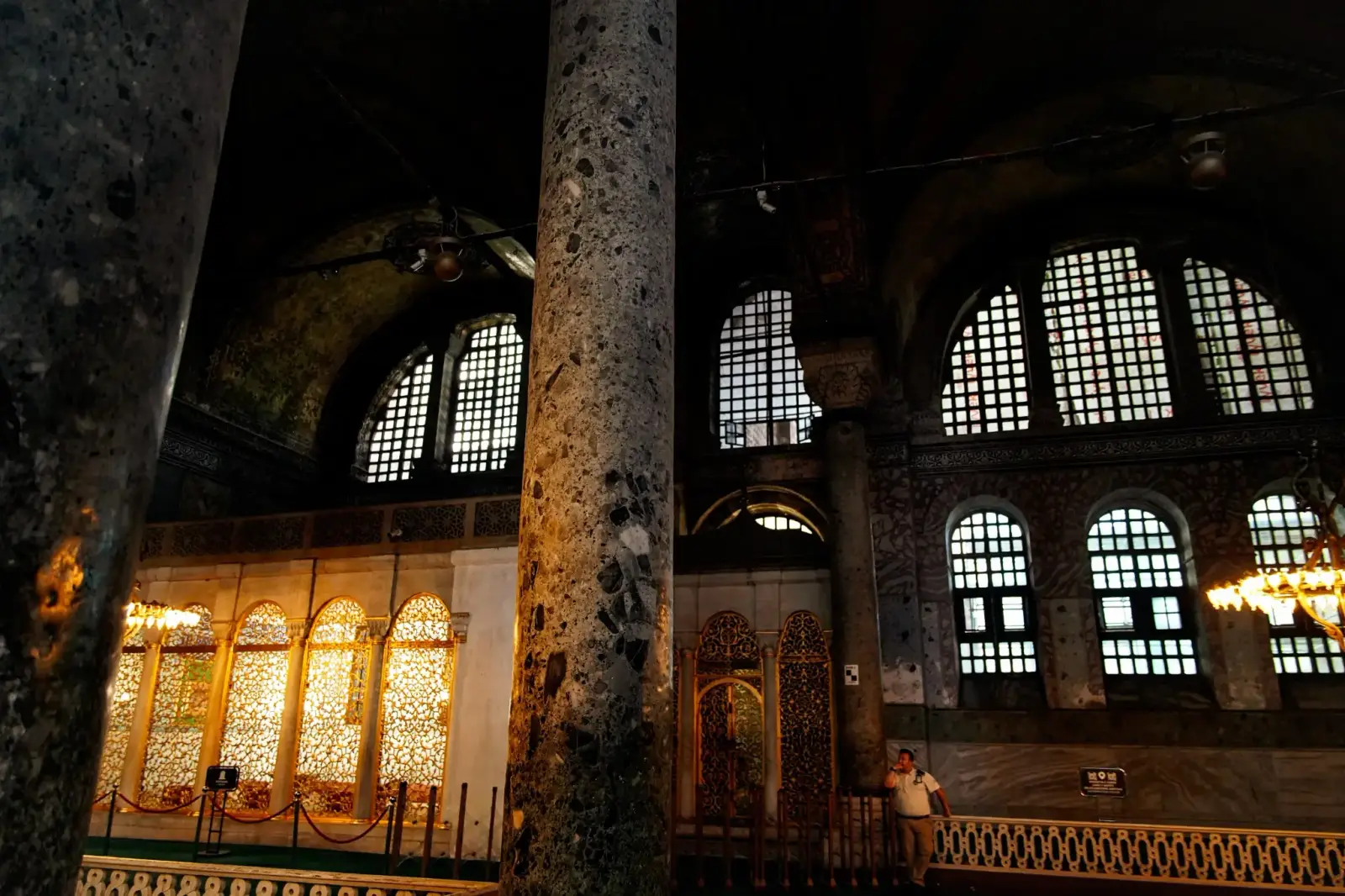
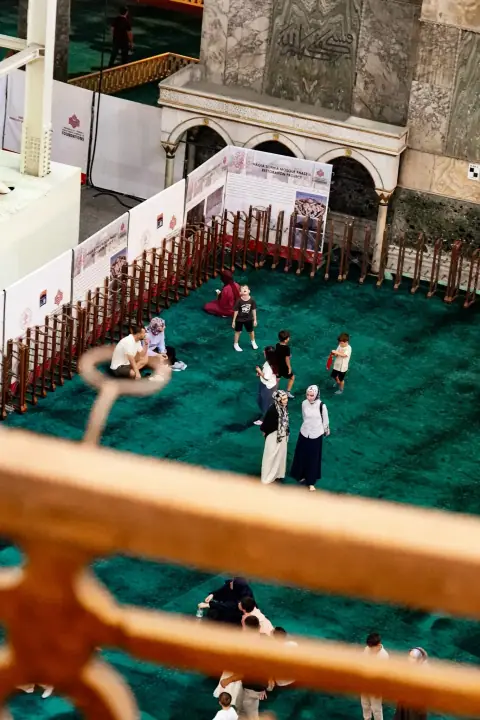
My first port of call was Hagia Sophia. Having made several trips here over the years, I have learned that entering this sixth-century monument requires a little thoughtful preparation. The building is an active mosque again, which means visitor flow is carefully separated, and we entered up towards the upper galleries. Before stepping inside, I had made sure my linen scarf was wound properly around my head and that my trousers covered my ankles. Watching a few unprepared sightseers attempt to improvise modest dress with brightly coloured rain ponchos reminded me why I always pack a dedicated, opaque scarf in my day bag.
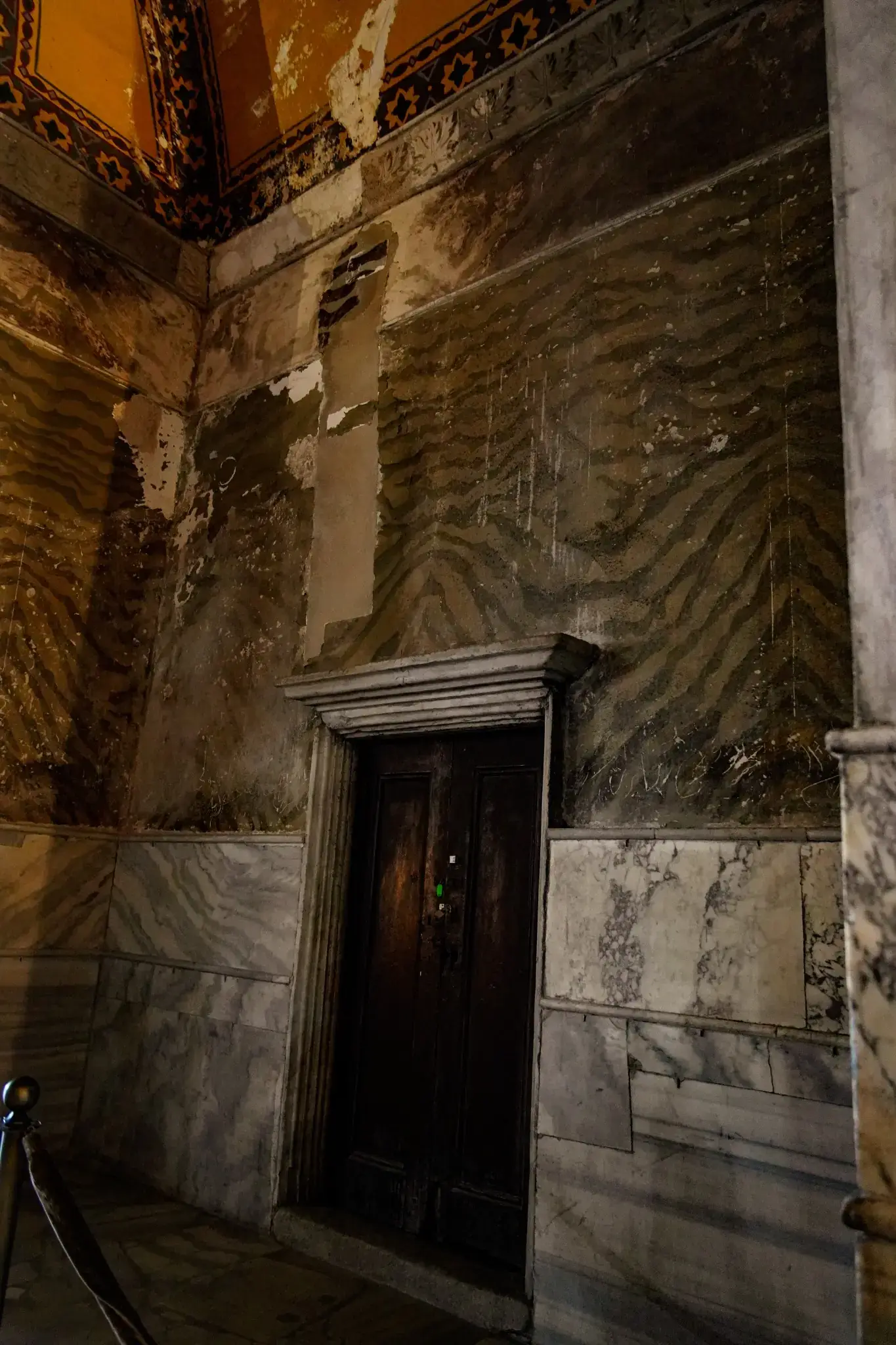
The ramp leading up to the gallery level was smooth and gently graded, paved with ancient stones polished by centuries of footsteps. When I emerged into the gallery itself, the shear scale of the interior hit me with the same quiet force it always does. Up here, you are brought nearly face-to-face with the massive round calligraphic medallions suspended against the vast arches, their dark wood and gold script hanging in the warm half-light.
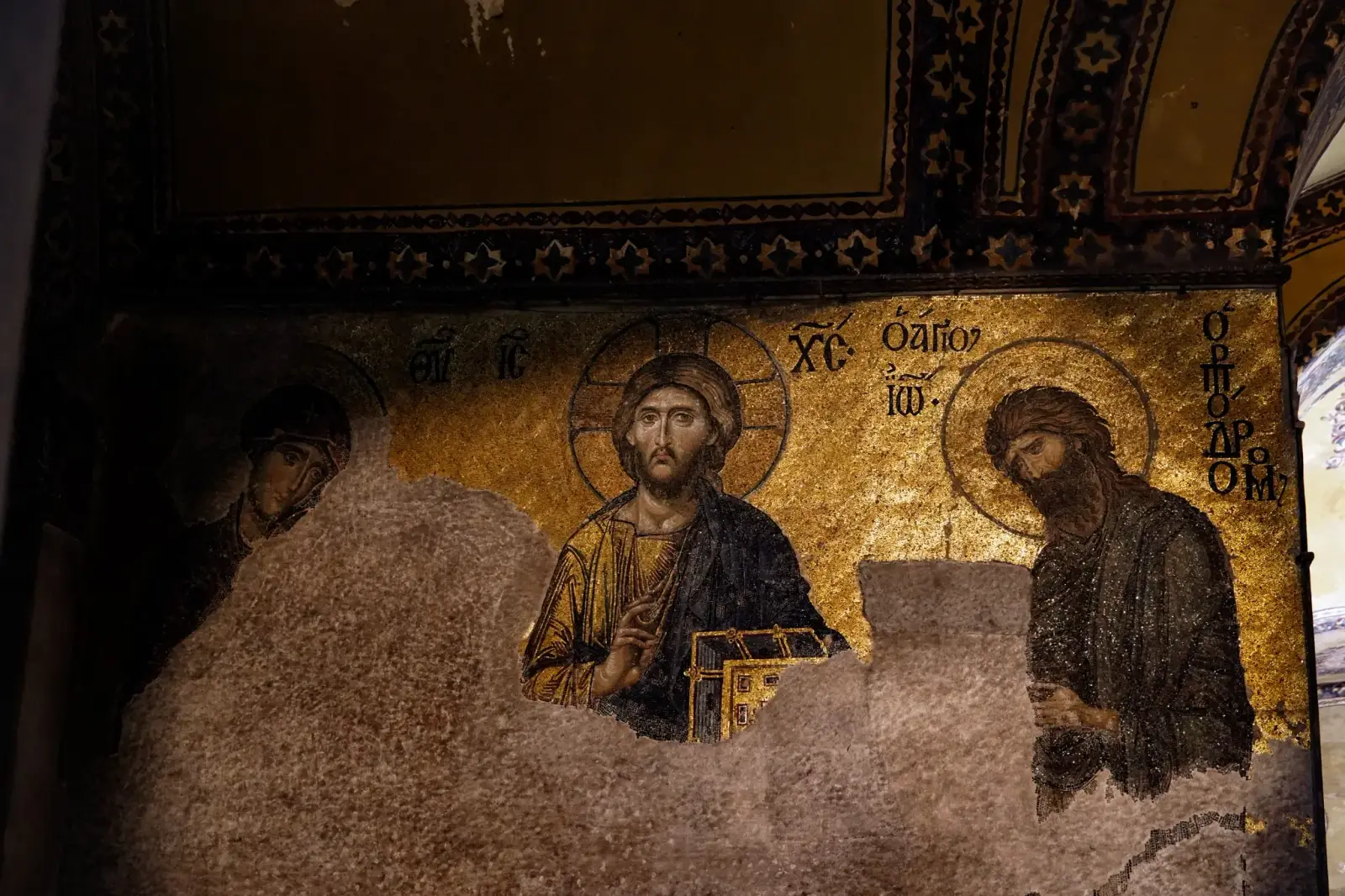
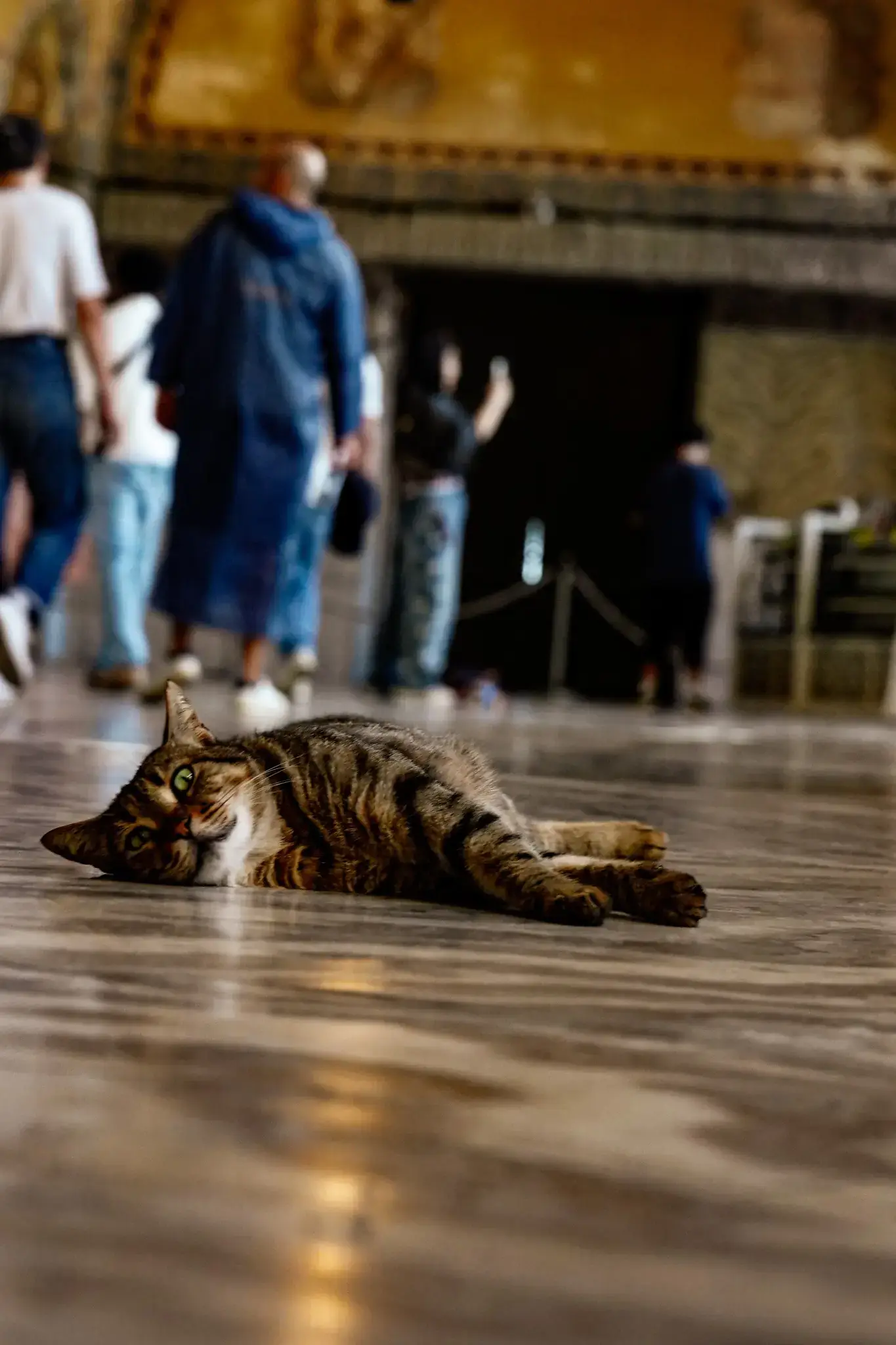
I spent a good half hour lingering near the Deesis mosaic. Even though portions of the lower plaster have long since fallen away, the surviving faces of Christ, John the Baptist, and the Virgin Mary possess an uncanny, quiet tenderness. Up close, the irregular tilt of the tiny gold glass tesserae catches whatever ambient light filters through the high clerestory windows, creating an almost shimmering effect. Down below, the prayer floor stretched out under the great dome, but up in the gallery, the atmosphere felt hushed and contemplative. Naturally, an unflappable tabby cat was curled up on a warm marble plinth near the south gallery balustrade, utterly indifferent to both Byzantine splendour and Ottoman grandeur.
By midday, the mist outside had thickened into a respectable shower. Rather than pacing the square looking for shelter among umbrella touts, I crossed the tram line directly opposite Hagia Sophia and headed into the subterranean sanctuary of the Basilica Cistern.
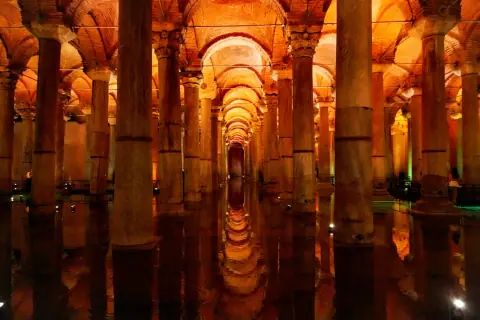
Sinking beneath street level into the reservoir always feels like stepping backstage behind the city. The air immediately turned cool, damp, and still, carrying that mineral smell of ancient brick and fresh water. Raised timber walkways now guide you cleanly through the forest of hundreds of carved marble columns, each illuminated by low, shifting lights that ripple across the shallow water beneath.
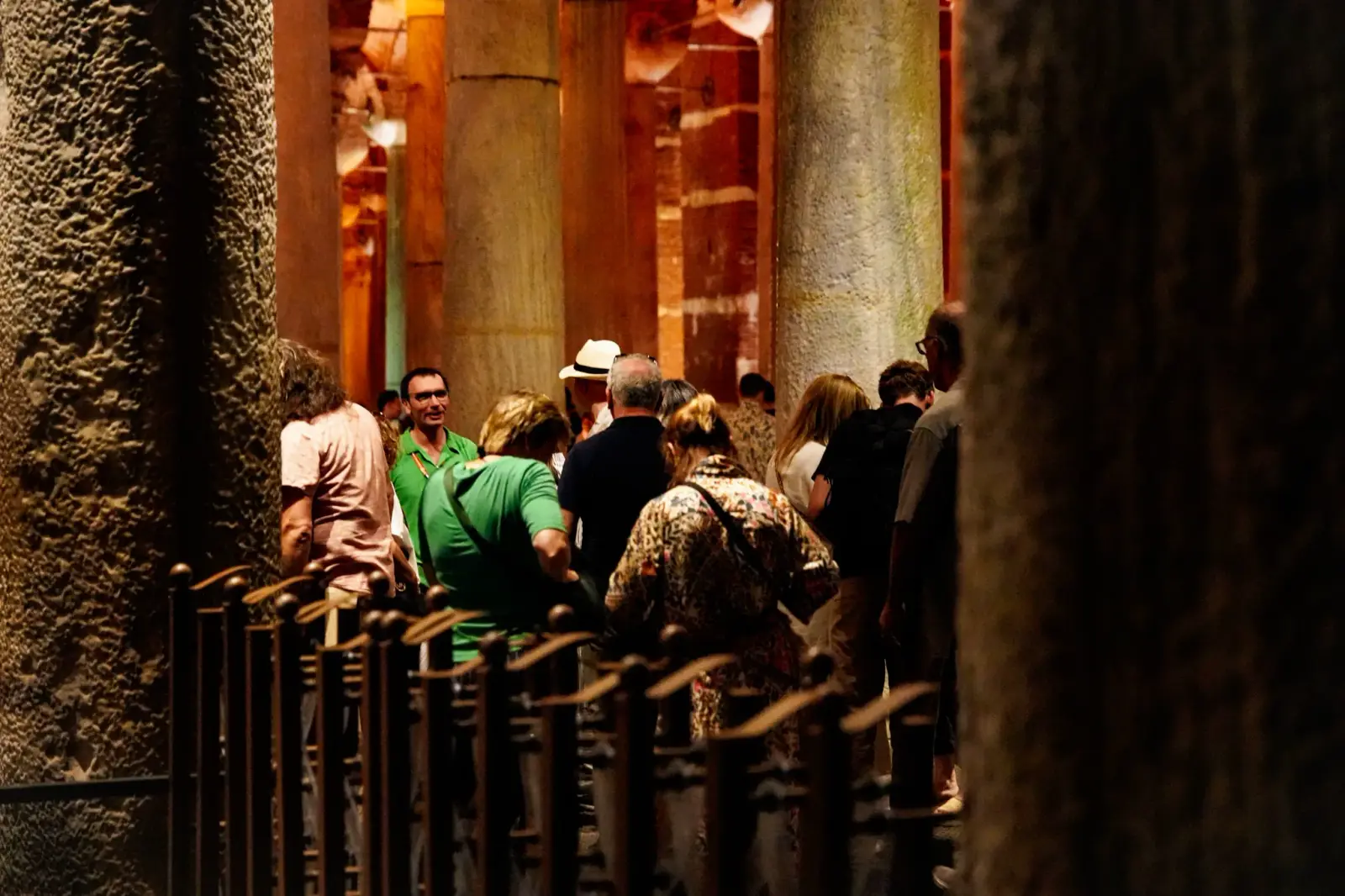
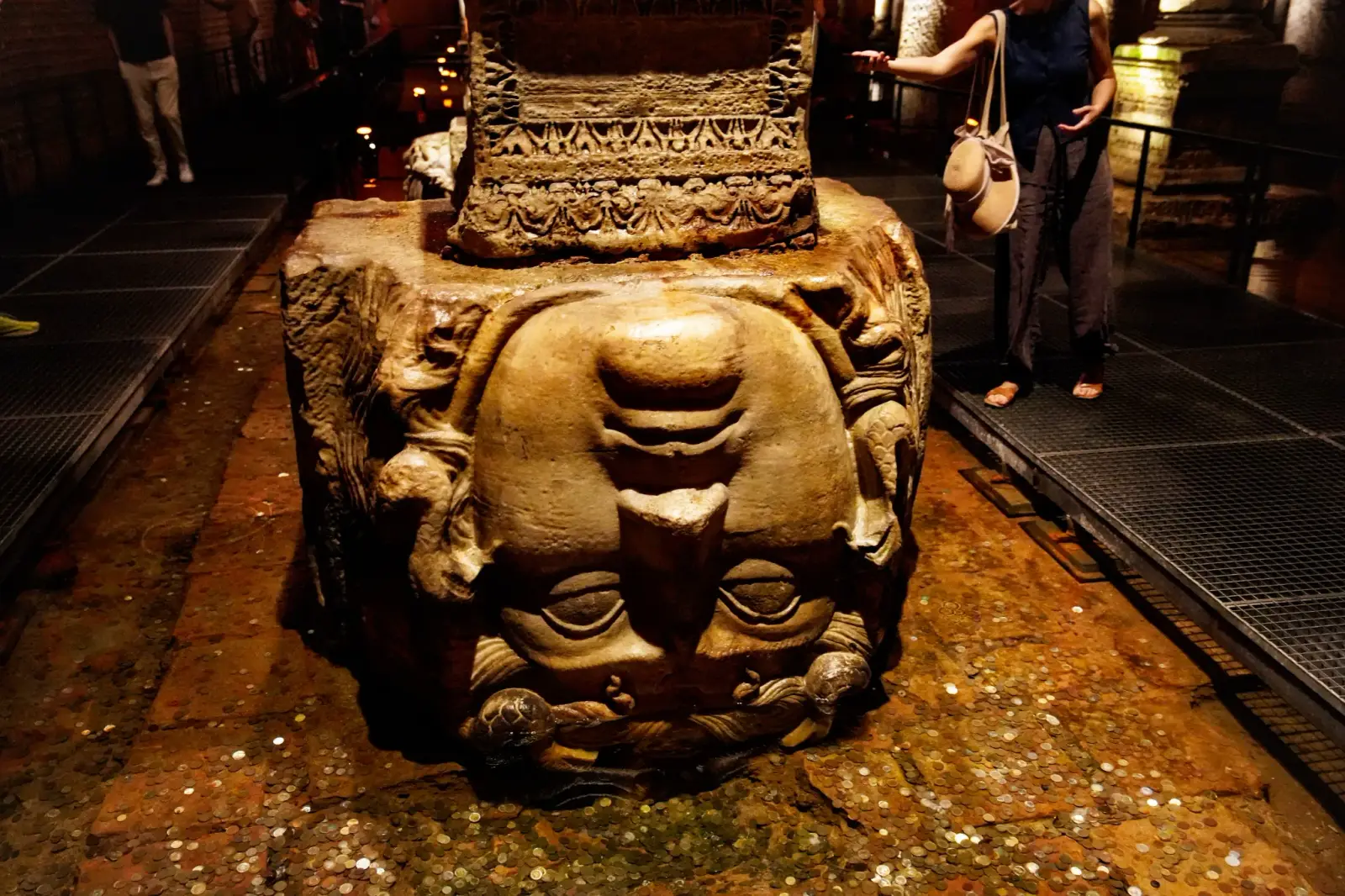
I took my time ambling along the walkways, letting my eyes adjust to the dimness. Most visitors march straight toward the far northwest corner, but I found myself pausing by the Weeping Column, its damp surface carved with raised teardrop patterns and peacocks' eyes, glistening under the soft spotlights. Eventually, I joined the quiet cluster of people admiring the two famous Medusa head bases tucked beneath column plinths in the corner. One rests sideways, the other entirely upside down. Seeing those heavy classical stone curls submerged in shallow water, repurposed by sixth-century Roman builders who clearly cared far more about structural height than pagan symbolism, remains one of the most delightful quirks on the peninsula.
Emerging back into the Sultanahmet drizzle, my feet were beginning to register the miles of wet flagstones, and my thoughts turned firmly toward a proper sit-down and something warming. I avoided the aggressive calls from the tourist restaurants lining the main tram avenue and instead cut behind Hagia Sophia toward Soğuk Çeşme Street, a picturesque lane hugging the outer defensive walls of Topkapı Palace.
Tucked right along this quiet brick stretch is Chimney Bistro. I stepped inside to find an inviting haven: exposed brick, warm pendant lighting, and the comforting clatter of a lively kitchen. While they have an open roof section that I have enjoyed on balmy summer evenings, on a damp afternoon like this, the ground-floor brick bar area was an absolute sanctuary.
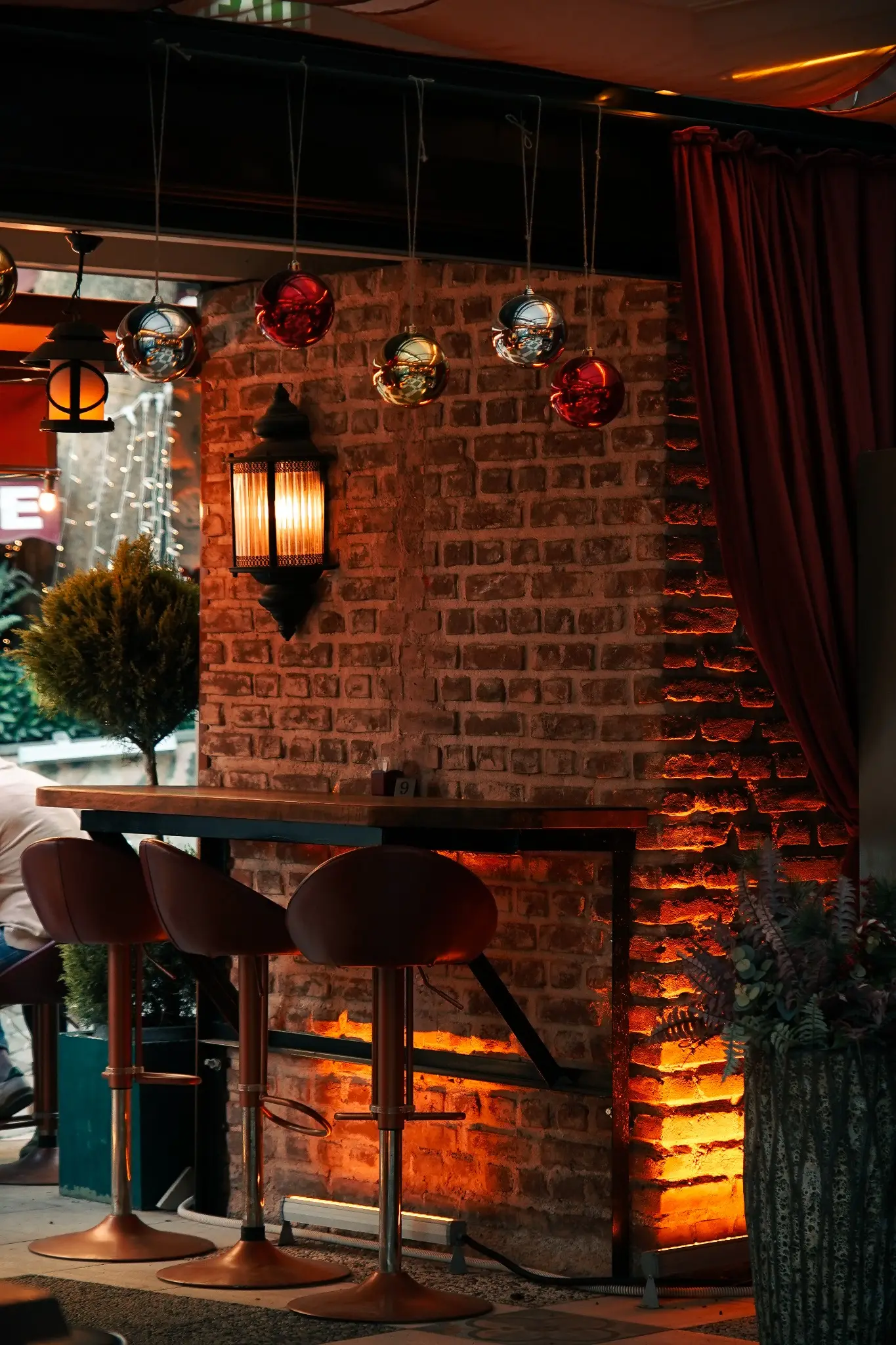
I settled onto a wooden bench, hung my damp jacket over the back of the chair, and ordered their Chimney Combo, which sorted out both a hearty hot meal and a cold drink without any fuss. The hot minced beef pide arrived straight from the oven on a wooden board, crust blistered and crisp at the tapered edges, alongside a glass of crisp local wine. Sitting there with good food, watching the occasional umbrella bob past the tall windows against the ancient palace wall, the day felt perfectly rounded off.
Book a table and the meal comboChimney Bistro, Sultanahmet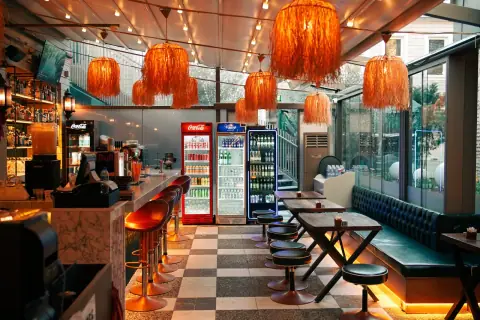
What worked well for me on this route
- Pairing high galleries with underground vaults: Visiting Hagia Sophia's upper galleries and the Basilica Cistern on the same afternoon worked brilliantly; neither required miles of open-air walking, making it an ideal wet-weather plan.
- Packing a proper scarf in advance: Having my own large, lightweight scarf ready in my day bag saved me the hassle and fuss of buying temporary coverings at the entrance of Hagia Sophia.
- Ending on Soğuk Çeşme Street: Escaping the busy tramway for the cobbled street behind the palace walls gave me a genuinely quiet, relaxed dinner at Chimney Bistro without having to battle the crowds at the main Sultanahmet junction.